dynex tv user manual
dynex tv user manual
Dynex televisions, backed by extensive documentation, offer a range of models supported by over 1479 downloadable PDF user manuals and guides, ensuring comprehensive assistance․
What is Dynex?
Dynex is a house brand primarily associated with Best Buy, offering a variety of consumer electronics, with a significant focus on televisions․ While not a manufacturer in the traditional sense, Dynex products are generally produced by established manufacturers under contract for Best Buy․
The brand aims to provide affordable options for consumers seeking functional technology without the premium price tag of well-known brands․ A key aspect of Dynex’s support structure is the availability of extensive documentation․ Over 1479 PDF user manuals, service manuals, and operating guides are readily accessible online, covering a wide range of Dynex products, including LCD TVs and various adapters․
This commitment to providing readily available manuals demonstrates a dedication to customer support, allowing users to easily find information regarding setup, operation, and troubleshooting for their Dynex televisions․
Dynex TV Models: A Brief Overview
Dynex offers a diverse range of television models, encompassing various screen sizes and technologies, all supported by a wealth of downloadable resources․ Currently, manuals are available for 103 Dynex television models, including detailed operating instructions, comprehensive user manuals, and technical product guides․
These resources cater to a broad spectrum of Dynex TV owners, ensuring assistance is readily available․ The official Dynex support website, alongside numerous third-party manual download sites, hosts these documents․ Users can easily browse and download the specific manual tailored to their particular Dynex TV model․
This extensive library of manuals, exceeding 1479 PDFs, highlights Dynex’s commitment to providing accessible support for its products, simplifying the user experience and facilitating troubleshooting․
Setting Up Your Dynex TV
Dynex user manuals provide detailed guidance for initial setup, unboxing procedures, and connecting essential components, ensuring a smooth and straightforward television experience․
Unboxing and Initial Setup
Carefully unpack your new Dynex TV, referencing the user manual for a component checklist to ensure everything is present․ Retain the original packaging for potential future transport or warranty claims․ Before connecting any cables, position the TV on a stable surface or mount it securely, following the manual’s instructions for VESA mounting if applicable․
The initial setup, as detailed in the Dynex TV’s operating guide, typically involves powering on the device and following the on-screen prompts․ This includes selecting your preferred language, country, and agreeing to the terms and conditions․ The manual will guide you through connecting to your home Wi-Fi network, if your model supports smart features, and completing the channel scan for over-the-air broadcasts․ Always consult the specific manual for your Dynex TV model for precise instructions․
Connecting to Power and Basic Connections
Before connecting, ensure the Dynex TV’s voltage matches your household power supply, as detailed in the user manual․ Connect the power cord securely to the TV and a grounded outlet․ For basic connections, locate the antenna/cable input on the TV and connect your coaxial cable․ This allows access to over-the-air broadcasts or cable TV channels․
The Dynex operating guide illustrates the location of these ports․ If using a set-top box, connect the composite (red, white, yellow) or component (red, green, blue) cables to the corresponding inputs on the TV․ Refer to your manual for proper color-coding and connection diagrams․ Always power off both the TV and connected devices before making or changing any connections, as outlined in the Dynex TV’s safety instructions․
Connecting External Devices (HDMI, USB, etc․)
To connect external devices, utilize the HDMI ports for high-definition sources like Blu-ray players, gaming consoles, or streaming devices․ The Dynex user manual details the HDMI input locations․ USB ports allow connection of USB drives for media playback – supported formats are listed within the documentation․ For older devices, composite or component inputs are available, though image quality will be lower․
Consult the manual for specific instructions on connecting each device type․ Some Dynex TVs may also feature optical audio outputs for connecting to soundbars or receivers․ Ensure proper cable connections and select the correct input source on your TV using the remote control․ The operating guide provides diagrams and troubleshooting tips for connectivity issues․
Understanding the Dynex TV Remote
The Dynex TV remote’s functions are thoroughly explained in the user manual, including button layouts and pairing instructions for universal remotes․
Remote Control Button Functions
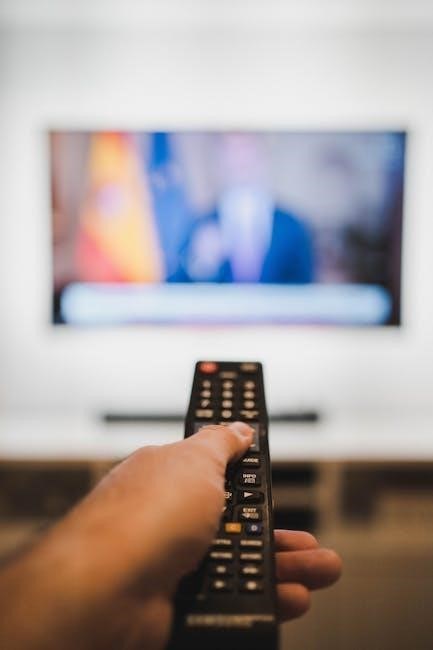
Understanding each button on your Dynex remote is crucial for optimal TV operation, and the user manual provides detailed explanations․ Power buttons initiate or terminate TV operation, while volume controls adjust the audio level․ Channel up/down buttons navigate through available channels, and the input/source button selects different connected devices․
Menu navigation buttons allow access to TV settings, and directional pads facilitate movement within menus․ Dedicated buttons for streaming services (if applicable) offer quick access․ The user manual illustrates each button’s function, clarifying their purpose․ Furthermore, it details any specialized buttons unique to specific Dynex TV models, ensuring users can fully utilize their remote’s capabilities for a seamless viewing experience․
Pairing a Universal Remote
Utilizing a universal remote with your Dynex TV offers convenience, but requires proper pairing․ The Dynex user manual often includes specific codes for various universal remote brands․ Begin by entering the correct code for your remote’s brand, following the instructions in both the universal remote and Dynex manuals․
Alternatively, some universal remotes feature auto-search functionality, systematically testing codes until the Dynex TV responds․ If pairing fails, consult the Dynex support website or the universal remote’s documentation for troubleshooting steps․ Ensure the remote is in pairing mode and positioned correctly towards the TV․ Successful pairing allows full control of your Dynex TV using a single, versatile remote․
Navigating the Dynex TV Menu
Dynex TV menus, detailed in the user manual, provide access to settings for picture, sound, and connectivity, offering a customizable viewing experience․
Main Menu Options Explained
The Dynex TV’s main menu, thoroughly documented in the user manual, serves as the central hub for all television functions and settings․ Typically, users will find options like ‘Picture’ for adjusting visual settings – brightness, contrast, color, and sharpness – to optimize the viewing experience․ ‘Sound’ controls audio output, allowing adjustments to volume, equalizer settings, and sound modes․
A ‘Channel’ or ‘Input’ section manages television channels and connected devices, enabling easy switching between sources like HDMI inputs or antenna broadcasts․ ‘Network’ settings, present on Smart TV models, facilitate Wi-Fi connection and access to online streaming services․ ‘Settings’ or ‘System’ encompasses broader configurations, including language preferences, time settings, parental controls, and software updates․ The user manual provides detailed explanations for each option, ensuring users can fully customize their Dynex TV․

Picture Settings and Adjustments
Dynex TV user manuals detail extensive picture adjustment options for a personalized viewing experience․ Users can fine-tune Brightness to control the overall light level, while Contrast adjusts the difference between light and dark areas․ Color settings allow saturation adjustments, and Sharpness controls the clarity of image details․
Advanced settings often include Backlight control, influencing the intensity of the screen’s illumination, and Color Temperature, affecting the warmth or coolness of the image․ Many models offer preset picture modes – such as ‘Standard,’ ‘Movie,’ or ‘Vivid’ – for quick optimization․ The manual guides users through these settings, explaining how each adjustment impacts the overall picture quality, enabling them to achieve optimal visuals based on their preferences and content․
Sound Settings and Adjustments
Dynex TV user manuals provide detailed instructions for customizing the audio experience․ Users can adjust the Volume, of course, but also access more nuanced controls like Treble, to enhance high-frequency sounds, and Bass, to boost low-frequency sounds․ Many models feature preset sound modes – ‘Standard,’ ‘Movie,’ ‘Music,’ or ‘News’ – offering optimized audio profiles for different content types․
Further adjustments often include an Equalizer, allowing precise control over specific frequency ranges, and Auto Volume Leveling (AVL), which minimizes sudden volume fluctuations․ The manual explains how to navigate these settings, helping users achieve balanced and immersive sound tailored to their preferences and listening environment, ensuring optimal audio clarity and enjoyment․
Troubleshooting Common Dynex TV Issues
Dynex TV user manuals offer solutions for common problems like no picture, no sound, and connectivity issues, guiding users through diagnostic steps․
No Picture Issues
If your Dynex TV displays a black screen or no picture, the user manual suggests several troubleshooting steps․ First, verify the power cord is securely connected to both the TV and a working outlet․ Next, confirm the input source is correctly selected using the remote; cycle through HDMI, AV, and other options․
Check if the backlight is functioning – shine a flashlight close to the screen; a faint image suggests a backlight problem․ Ensure the brightness and contrast settings aren’t minimized․ Consult the manual for reset instructions, as a factory reset can resolve software glitches․ If issues persist, the manual directs users to Dynex support for further assistance, potentially indicating a hardware failure requiring professional repair․
No Sound Issues
Experiencing no sound on your Dynex TV? The user manual guides you to initially check the volume level, ensuring it isn’t muted or set too low․ Verify the correct audio output is selected within the TV’s menu – options include TV speakers, HDMI ARC, or optical audio․ If using external speakers, confirm their power and connections are secure․
The manual advises testing with different channels or input sources to isolate the problem․ A factory reset, detailed in the manual, can resolve software-related audio issues․ If the problem continues, consult the Dynex support documentation for specific model troubleshooting, potentially indicating a speaker or audio processing component failure needing professional attention․
Connectivity Problems (HDMI, USB)
Encountering issues connecting devices via HDMI or USB? The Dynex TV user manual recommends verifying cable connections at both the TV and the source device, ensuring they are firmly seated․ Try different HDMI ports on the TV, as some may offer enhanced functionality․ For USB, confirm the device is compatible and properly formatted․
The manual suggests testing with different cables to rule out a faulty cord․ If problems persist, check the input source selection on the TV, ensuring it matches the connected device․ A power cycle of both the TV and the connected device can often resolve temporary connectivity glitches․ Refer to the manual’s troubleshooting section for model-specific guidance․
Downloading Dynex TV User Manuals
Accessing Dynex manuals is straightforward; over 36 PDF documents are readily available for download from official and third-party websites for free․
Official Dynex Support Website
Finding your Dynex TV’s user manual directly through the official support channels is the most reliable method․ While a dedicated, currently active Dynex website is difficult to pinpoint, resources indicate accessing manuals often involves navigating through the support sections of retailers who previously carried Dynex products, such as Best Buy․
These retailer sites frequently archive older product documentation, including comprehensive PDF manuals covering various Dynex television models․ Users can typically browse by device category (TVs) and then select their specific model number to locate the corresponding user guide․ The availability of manuals can vary, but these official channels generally provide the most accurate and up-to-date information regarding your Dynex TV’s operation, troubleshooting, and specifications․ Remember to have your model number handy for a quicker search!
Third-Party Manual Download Sites
When official sources are limited, several third-party websites specialize in archiving and providing access to user manuals for discontinued or older products like Dynex TVs․ These platforms, such as ManualsLib and similar online repositories, compile a vast collection of PDF documents sourced from various origins․
However, users should exercise caution when downloading from these sites, verifying the file’s integrity and ensuring it matches their specific Dynex TV model․ While convenient, the accuracy and completeness of manuals on third-party sites aren’t always guaranteed․ It’s advisable to cross-reference information with other sources whenever possible and be mindful of potential download risks․ These sites offer a valuable alternative when direct manufacturer support is unavailable․

Dynex TV Specifications and Features
Dynex televisions encompass diverse resolutions and features, with detailed specifications available in over 36 downloadable PDF manuals and guides for users․
Resolution and Display Technology
Dynex TVs, as detailed within their extensive user manuals, showcase a variety of resolutions catering to diverse viewing preferences and needs․ These range from standard definition to high-definition options, including 720p, 1080p, and potentially even 4K Ultra HD in select models․ The available display technologies employed by Dynex typically include LCD (Liquid Crystal Display) panels, offering a balance between cost-effectiveness and image quality․
User manuals provide specific details regarding the native resolution of each TV model, crucial for optimizing picture settings and ensuring compatibility with external devices․ Understanding the display technology is also vital; LCD panels utilize backlighting to produce images, and the manuals often contain information about backlight types and their impact on contrast and brightness․ Further specifications, such as refresh rates and aspect ratios, are comprehensively documented within the downloadable PDF guides, empowering users to fully leverage their Dynex television’s capabilities․
Smart TV Features (If Applicable)
Dynex TV user manuals detail any integrated smart functionalities, though not all models possess these capabilities․ When present, these features typically include access to streaming services, web browsing, and app installations, enhancing the viewing experience beyond traditional broadcast television․ The manuals provide step-by-step instructions on connecting to a Wi-Fi network, navigating the smart platform interface, and troubleshooting common connectivity issues․
Specific smart features, such as voice control compatibility or pre-installed applications, are thoroughly documented․ Users can find guidance on creating accounts, managing app subscriptions, and customizing the smart TV’s settings․ The downloadable PDF guides often include troubleshooting sections dedicated to smart features, addressing problems like buffering, app crashes, or difficulties with software updates․ These resources ensure users can maximize the potential of their Dynex smart TV․